

Can a rotary joint for water be used in vacuum applications? That's a question I've been asked quite a bit lately, especially since I'm in the business of supplying rotary joints for water. Let's dive right in and break this down.
First off, what's a rotary joint for water? Well, it's a nifty little device that allows for the transfer of water between a stationary and a rotating part. You can find them in all sorts of applications, from industrial machinery to your own backyard garden. For instance, if you're looking for a Rotary Connector for Water Flow, it's designed to handle the flow of water smoothly as parts rotate. And if you're into gardening, a Garden Hose Rotating Union Water can make your watering tasks a whole lot easier.
Now, let's talk about vacuum applications. Vacuum environments are quite different from regular water - based setups. In a vacuum, the pressure is significantly lower than the atmospheric pressure. This low - pressure situation can cause all sorts of issues for components that are not designed for it.
One of the main concerns when considering using a water rotary joint in a vacuum is the sealing. Water rotary joints are typically designed to seal against water pressure. The seals in these joints are made to prevent water from leaking out under normal operating conditions. However, in a vacuum, the pressure differential is reversed. Instead of keeping water in, the seal has to prevent air from being sucked into the system.
Most water rotary joints use elastomeric seals, like rubber or silicone. These seals work great for water applications because they can withstand the relatively low pressures and the chemical properties of water. But in a vacuum, these elastomers can outgas. Outgassing is when the material releases gases that it has absorbed over time. This can contaminate the vacuum environment and also affect the performance of the rotary joint itself.
Another aspect is the material compatibility. Water rotary joints are often made of materials that are resistant to water corrosion. For example, some are made of stainless steel or brass. While these materials are great for water, they might not be the best choice for a vacuum. In a vacuum, materials need to have low vapor pressure to avoid outgassing. Some metals that are fine in water applications can release small amounts of gas in a vacuum, which can be a problem.
The design of water rotary joints also plays a role. They are usually optimized for the flow of water, which has a certain viscosity and flow rate. In a vacuum, the flow characteristics are completely different. There's no liquid to flow in the traditional sense, and the movement of gas molecules is governed by different physics. The internal channels and passages in a water rotary joint might not be suitable for the gas flow in a vacuum, leading to poor performance or even blockages.
However, there are some cases where a water rotary joint might be used in a vacuum, but with some modifications. If the vacuum level is relatively low, and the outgassing and sealing requirements are not too strict, it might be possible to adapt a water rotary joint. For example, if you're using a Rotary Union for Coolant in a system where the vacuum is just a small part of the overall process and the contamination from outgassing is not a major concern, you could potentially make it work.
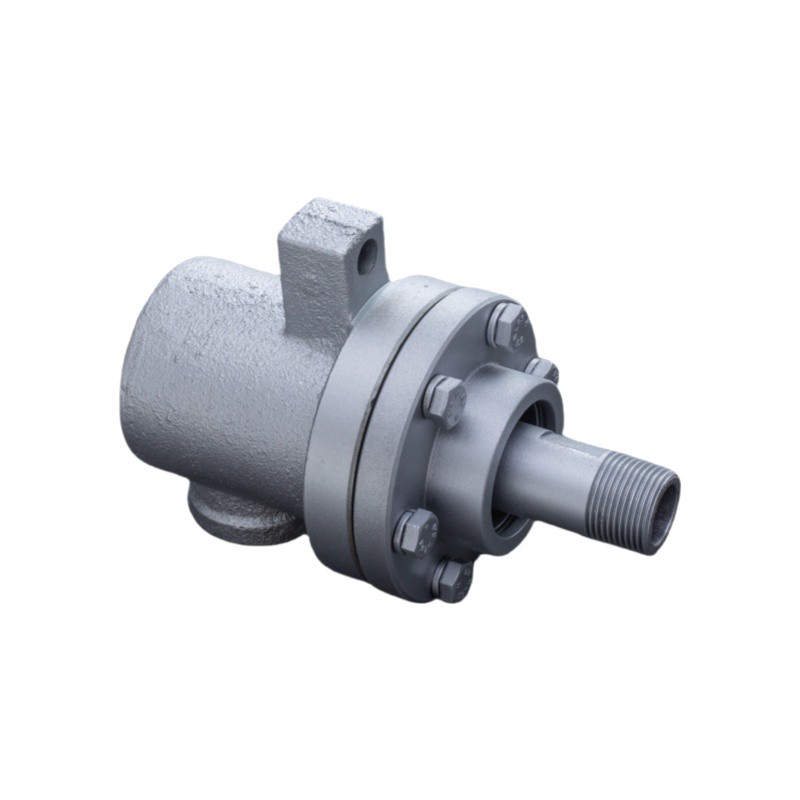

You could try replacing the elastomeric seals with materials that have lower outgassing rates, like metal seals. Metal seals can handle the pressure differentials in a vacuum better and have less of a tendency to outgas. You also need to ensure that the materials used in the joint are vacuum - compatible. This might involve using special coatings or choosing different base materials.
But it's important to note that these modifications are not always straightforward. They require a good understanding of both water rotary joint technology and vacuum engineering. If you're not experienced in this area, it's easy to make mistakes that can lead to system failures.
So, can a water rotary joint be used in a vacuum? The short answer is: it's complicated. In most cases, a standard water rotary joint is not suitable for vacuum applications due to sealing, outgassing, and material compatibility issues. But with the right modifications and a proper understanding of the requirements, it might be possible in some specific situations.
If you're in a situation where you're considering using a water rotary joint in a vacuum, I'd highly recommend reaching out to an expert. As a supplier of water rotary joints, I've seen a lot of different applications, and I'm more than happy to help you figure out the best solution for your needs. Whether you need advice on modifying a joint or are looking for a completely new product that's designed for both water and vacuum applications, I'm here to assist.
If you're interested in learning more about our water rotary joints or have any questions regarding their use in unique applications, don't hesitate to get in touch. We can have a detailed discussion about your specific requirements and see if we can come up with a solution that works for you.
References
- "Vacuum Technology: A Practical Guide"
- "Handbook of Sealing Technology"
- Industry whitepapers on rotary joint design and applications