

Hey there! As a supplier of Gat Rotary Joints, I often get asked a bunch of questions. One of the most common ones is whether our Gat Rotary Joint can be used in cryogenic environments. Let's dig into this topic and find out.
First off, what exactly are cryogenic environments? Cryogenic temperatures typically refer to extremely low temperatures, usually below -150°C (-238°F). These kinds of environments are found in various industries, like aerospace, medical research, and liquefied natural gas (LNG) processing. In these industries, equipment has to work flawlessly under such harsh conditions.
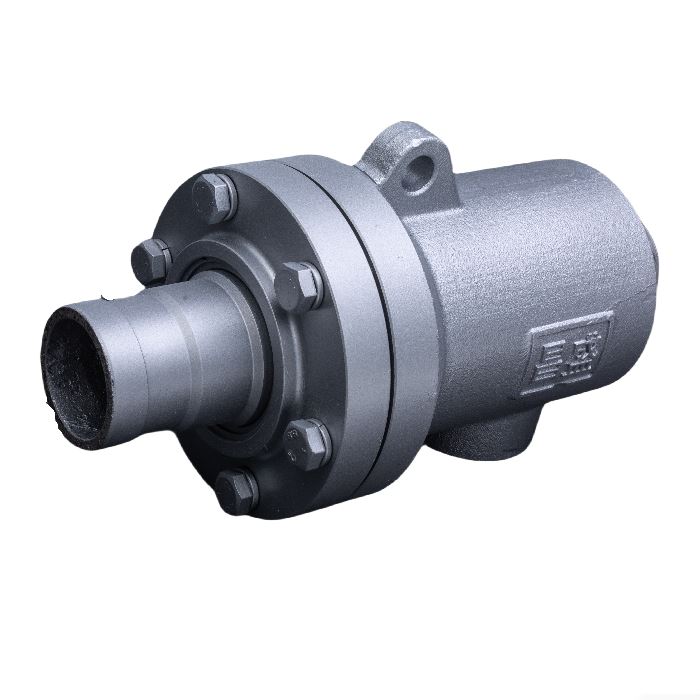
Now, let's talk about our Gat Rotary Joint. A rotary joint is a crucial component that allows the transfer of fluid, gas, or electrical signals between a stationary and a rotating part. It's used in a wide range of applications, from industrial machinery to robotics.
When it comes to using a Gat Rotary Joint in cryogenic environments, there are several factors we need to consider.
Material Compatibility
The materials used in the construction of the rotary joint play a huge role. At low temperatures, materials can become brittle and lose their flexibility. For example, some plastics and elastomers that work well at room temperature may crack or break in cryogenic conditions. That's why we use high - quality materials in our Gat Rotary Joints. We've carefully selected metals and alloys that have good low - temperature properties. Stainless steel, for instance, is a popular choice because it retains its strength and toughness even at extremely low temperatures.
Sealing Performance
Sealing is another critical aspect. A proper seal is essential to prevent leaks, especially when dealing with cryogenic fluids or gases. In cryogenic environments, the thermal contraction of materials can cause the seals to loosen. Our Gat Rotary Joints are designed with advanced sealing technologies. We use special seals made from materials that can withstand the extreme cold and maintain their sealing properties. These seals are engineered to compensate for the thermal contraction and ensure a tight seal throughout the operation.
Lubrication
Lubrication is important for the smooth operation of the rotary joint. However, traditional lubricants can thicken or solidify at cryogenic temperatures, which can lead to increased friction and wear. We've developed special lubricants for our Gat Rotary Joints that are suitable for cryogenic use. These lubricants have low - temperature fluidity, which means they can still provide adequate lubrication even in extremely cold conditions.
Thermal Expansion and Contraction
As mentioned earlier, thermal expansion and contraction are significant issues in cryogenic environments. Different materials expand and contract at different rates when the temperature changes. Our engineers have designed the Gat Rotary Joints to accommodate these changes. The joint's structure is engineered to allow for the relative movement of components due to thermal expansion and contraction without causing damage or affecting the performance.
Testing and Certification
We don't just assume that our Gat Rotary Joints will work in cryogenic environments. We conduct extensive testing to ensure their reliability. Our products are tested in specialized cryogenic test chambers where we can simulate real - world cryogenic conditions. We also comply with relevant industry standards and certifications for cryogenic applications. This gives our customers the confidence that our Gat Rotary Joints are up to the task.
Case Studies
Let's look at some real - world examples. In the aerospace industry, our Gat Rotary Joints have been used in cryogenic fuel systems. These systems require precise control and reliable transfer of cryogenic fuels. Our joints have proven to be reliable in these applications, withstanding the extreme cold and high - pressure conditions. In the medical research field, where cryogenic storage and handling of biological samples are common, our Gat Rotary Joints have been used in equipment for transferring cryogenic gases. The consistent performance of our joints has helped researchers carry out their work efficiently.
Comparison with Other Rotary Joints
There are other types of rotary joints available in the market, such as Fiber Rotary Joint and Over The Shaft Rotary Union. While each type has its own advantages, our Gat Rotary Joints have some unique features that make them well - suited for cryogenic environments.
Fiber Rotary Joints are mainly used for the transmission of optical signals. They may not be as robust when it comes to handling cryogenic fluids or gases. Over The Shaft Rotary Unions are designed for specific applications and may not have the same level of engineering for cryogenic use as our Gat Rotary Joints.
Conclusion
So, can our Gat Rotary Joint be used in cryogenic environments? The answer is a resounding yes! Thanks to our careful material selection, advanced sealing technologies, suitable lubrication, and smart design, our Gat Rotary Joints are capable of operating reliably in extremely cold conditions.
If you're in an industry that requires equipment for cryogenic applications, our Gat Rotary Joints could be the perfect solution for you. We're always happy to discuss your specific needs and provide customized solutions. Whether you're working on a small - scale research project or a large - scale industrial operation, we've got you covered.
If you're interested in learning more about our Gat Rotary Joints or would like to discuss a potential purchase, don't hesitate to get in touch. We're here to help you make the right choice for your cryogenic applications. Let's start a conversation and see how our products can benefit your business.

References
- ASM Handbook Volume 6: Welding, Brazing, and Soldering. ASM International.
- Cryogenic Engineering Handbook. Edited by Richard W. Fast.
- Standards for Cryogenic Equipment. International Organization for Standardization (ISO).