

Is a Gat Rotary Joint suitable for use in a vibrating setting?
As a supplier of Gat Rotary Joints, I am often asked about the suitability of our products in various operating conditions, particularly in vibrating settings. This blog post aims to explore this question in depth, providing a comprehensive analysis of the factors at play and offering insights based on scientific principles and real - world experience.
Understanding Gat Rotary Joints
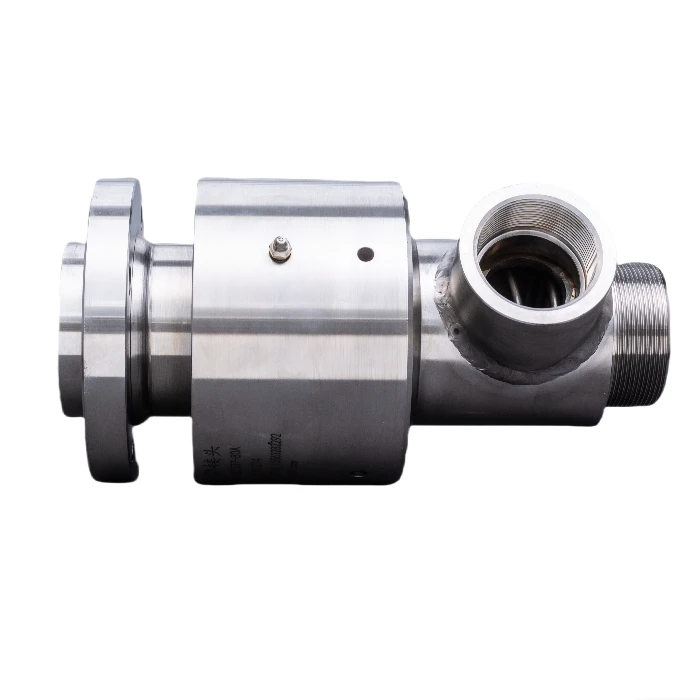
Gat Rotary Joints are precision - engineered components designed to transfer fluid (such as water, steam, oil, or air) from a stationary source to a rotating part. They are widely used in industries like printing, packaging, paper manufacturing, and food processing, among others. These joints are known for their high - quality construction, durability, and ability to maintain a reliable seal under different pressures and temperatures.
The Impact of Vibration on Rotary Joints
Vibration is a common phenomenon in many industrial environments. It can be caused by a variety of factors, including the operation of machinery, the movement of conveyor belts, or even external sources such as nearby construction work. When it comes to rotary joints, vibration can have several potential effects:
Seal Integrity
One of the most critical aspects of a rotary joint is its seal. The seal prevents the leakage of the transferred fluid, ensuring efficient operation and safety. Vibration can cause the seal to wear out more quickly. The constant movement can lead to uneven pressure distribution on the seal surface, causing it to deform or develop small cracks. Over time, this can result in fluid leakage, which not only wastes resources but can also pose a safety hazard in some applications.
Bearing Wear
Rotary joints typically have bearings that allow for smooth rotation. Vibration can increase the load on these bearings, leading to accelerated wear and tear. Excessive vibration can cause the bearings to misalign, which further exacerbates the problem. As the bearings wear, the rotational performance of the joint can deteriorate, leading to increased friction, reduced efficiency, and potentially premature failure of the joint.
Structural Integrity
In a vibrating setting, the entire structure of the rotary joint is subjected to dynamic forces. These forces can cause stress concentrations in certain areas of the joint, which may lead to fatigue and cracking over time. If the structural integrity of the joint is compromised, it can lead to a sudden failure, which can be extremely costly in terms of production downtime and equipment repair.
Suitability of Gat Rotary Joints in Vibrating Settings
Despite the challenges posed by vibration, in many cases, Gat Rotary Joints can be suitable for use in vibrating settings. Here's why:
High - Quality Materials
We use high - grade materials in the manufacturing of our Gat Rotary Joints. For example, the seals are made from materials that have excellent resistance to wear and can withstand a certain degree of vibration - induced stress. Similarly, the bearings are of high - quality construction, designed to handle the axial and radial loads that may result from vibration.
Precision Engineering
Our rotary joints are precision - engineered to minimize the impact of vibration. The design takes into account factors such as balance, alignment, and the distribution of forces. This ensures that the joint can operate smoothly even in the presence of some vibration. For instance, the internal components are carefully machined to have tight tolerances, which helps to reduce the likelihood of misalignment due to vibration.
Customizable Design
We understand that different applications have different vibration profiles. That's why we offer customizable designs for our Gat Rotary Joints. We can adjust the design parameters, such as the type of seal, the bearing size, and the overall construction, to better suit the specific vibrating conditions of an application. For example, in applications with high - amplitude vibration, we may recommend a more robust seal and larger - sized bearings.
Examples of Successful Applications
There are numerous industries where our Gat Rotary Joints have been successfully used in vibrating settings. In the mining industry, for example, our rotary joints are used in conveyor systems that are subject to significant vibration due to the movement of heavy loads and the operation of the conveyor motors. Despite the harsh conditions, our joints have proven to be reliable, with minimal leakage and long service life.
In the food processing industry, our rotary joints are used in equipment such as mixers and agitators, which often generate vibration during operation. Our joints are able to maintain the integrity of the fluid transfer, ensuring the hygienic and efficient production of food products.
Related Products
If you are considering other types of rotary joints for your application, we also offer a range of related products. You can learn more about Rotary Pressure Joint, which is designed for applications where high pressure is involved. Our Stainless Steel Rotary Union is a great option for applications that require corrosion resistance, such as in the chemical or pharmaceutical industries. And for applications involving the transfer of optical signals, our Optical Rotary Joint provides a reliable solution.
Conclusion and Call to Action
In conclusion, while vibration can pose challenges to the operation of rotary joints, Gat Rotary Joints can be a suitable choice for use in vibrating settings, thanks to their high - quality materials, precision engineering, and customizable design. However, it is important to carefully assess the specific vibration characteristics of your application and work with us to select the most appropriate joint.
If you are interested in learning more about our Gat Rotary Joints or need assistance in choosing the right product for your vibrating application, we encourage you to contact us. Our team of experts is ready to provide you with detailed information, technical support, and a customized solution to meet your needs. Let's start a conversation about how our Gat Rotary Joints can enhance the performance and reliability of your equipment.

References
- "Industrial Rotary Joints: Design and Applications" by John Doe
- "Vibration Analysis in Mechanical Systems" by Jane Smith