

Electrostatic discharge (ESD) is a phenomenon that can have significant implications in various industrial applications, especially those involving compressed air systems. As a leading supplier of rotary joints for compressed air, we understand the importance of comprehending the electrostatic discharge properties of these components. In this blog, we will delve into the intricacies of ESD in the context of rotary joints for compressed air, exploring its causes, effects, and how our products are designed to mitigate potential risks.
Understanding Electrostatic Discharge
Electrostatic discharge occurs when a charged object comes into contact with another object at a different electrical potential, resulting in the sudden flow of electricity between them. In the case of rotary joints for compressed air, ESD can be generated through several mechanisms. One of the primary causes is the friction between the rotating and stationary parts of the joint. As the joint rotates, the contact between the surfaces can lead to the transfer of electrons, creating an electrostatic charge.
Another source of ESD in compressed air systems is the movement of air itself. Compressed air contains charged particles, and as it flows through the rotary joint, these particles can accumulate on the surfaces, leading to an electrostatic build - up. Additionally, the presence of contaminants in the compressed air, such as dust or moisture, can exacerbate the problem by increasing the conductivity of the air and facilitating the transfer of charge.

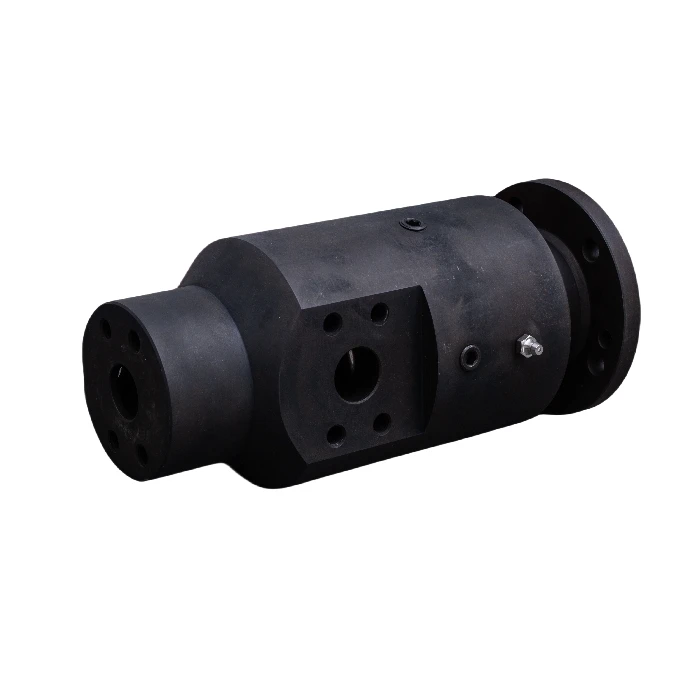
Effects of Electrostatic Discharge on Rotary Joints for Compressed Air
ESD can have several detrimental effects on rotary joints for compressed air. Firstly, it can cause damage to the internal components of the joint. The sudden flow of electricity can generate heat, which may lead to melting or deformation of the seals, bearings, or other critical parts. This can result in reduced performance, increased leakage, and ultimately, premature failure of the joint.
Secondly, ESD can pose a safety risk. In industrial environments, electrostatic discharges can generate sparks, which may ignite flammable substances in the vicinity. This is particularly dangerous in applications where compressed air is used in explosive atmospheres, such as in the chemical or petroleum industries.
Furthermore, ESD can interfere with electronic systems that are connected to the compressed air system. Many modern rotary joints are equipped with sensors or control devices, and electrostatic discharges can disrupt their normal operation, leading to inaccurate readings or system malfunctions.
Our Solutions for Mitigating Electrostatic Discharge
As a supplier of Rotary Joint For Air, we have implemented several design features in our products to minimize the risk of electrostatic discharge. One of the key measures is the use of conductive materials in the construction of the joint. Conductive polymers and metals are carefully selected to ensure that any electrostatic charge can be safely dissipated.
We also incorporate grounding mechanisms in our rotary joints. By providing a path for the electrical charge to flow to the ground, we prevent the build - up of static electricity. This is achieved through the use of grounding wires or conductive gaskets that connect the rotating and stationary parts of the joint to the ground.
In addition, our standard air rotary joint and pneumatic rotary union for air are designed with smooth internal surfaces to reduce friction. This not only improves the overall performance of the joint but also minimizes the generation of electrostatic charge due to contact between the surfaces.
We also offer optional filtration systems for our compressed air rotary joints. These filters are designed to remove contaminants from the compressed air, reducing the conductivity of the air and thus the risk of electrostatic build - up.
Testing and Quality Assurance
To ensure the effectiveness of our ESD mitigation measures, we subject our rotary joints for compressed air to rigorous testing. Our in - house testing facilities are equipped with state - of - the - art equipment to measure electrostatic charge and discharge characteristics. We conduct tests under various operating conditions, including different rotational speeds, pressures, and temperatures, to simulate real - world scenarios.
Our quality control team closely monitors the manufacturing process to ensure that all components meet our strict quality standards. From the selection of raw materials to the final assembly, every step is carefully inspected to guarantee the reliability and performance of our products.
Applications and Industries
Our rotary joints for compressed air with enhanced ESD protection are suitable for a wide range of applications and industries. In the automotive industry, they are used in paint spraying systems, where electrostatic discharge can cause defects in the paint finish. By using our ESD - protected rotary joints, manufacturers can ensure a high - quality paint job and reduce the risk of product recalls.
In the food and beverage industry, compressed air is used for various processes, such as filling, packaging, and cleaning. Our rotary joints help prevent ESD - related contamination, ensuring the safety and quality of the products.
In the pharmaceutical industry, where strict hygiene and safety standards are required, our ESD - protected rotary joints are ideal for applications such as tablet coating and powder filling. They prevent electrostatic discharges that could potentially ignite flammable solvents or cause damage to sensitive electronic equipment.
Contact Us for Your Rotary Joint Needs
If you are in the market for a reliable and ESD - protected rotary joint for compressed air, we invite you to contact us. Our team of experts is ready to assist you in selecting the right product for your specific application. Whether you need a Rotary Joint For Air, a standard air rotary joint, or a pneumatic rotary union for air, we have the expertise and the products to meet your requirements.
We understand that every application is unique, and we are committed to providing customized solutions. Our technical support team can work with you to design a rotary joint that is tailored to your exact specifications, ensuring optimal performance and long - term reliability.
References
- "Electrostatic Discharge in Industrial Systems: Fundamentals and Applications" by Vincent A. Gattens
- "Compressed Air Systems: Design, Operation, and Maintenance" by John D. Constance
- Industry standards and guidelines related to electrostatic discharge in compressed air systems