

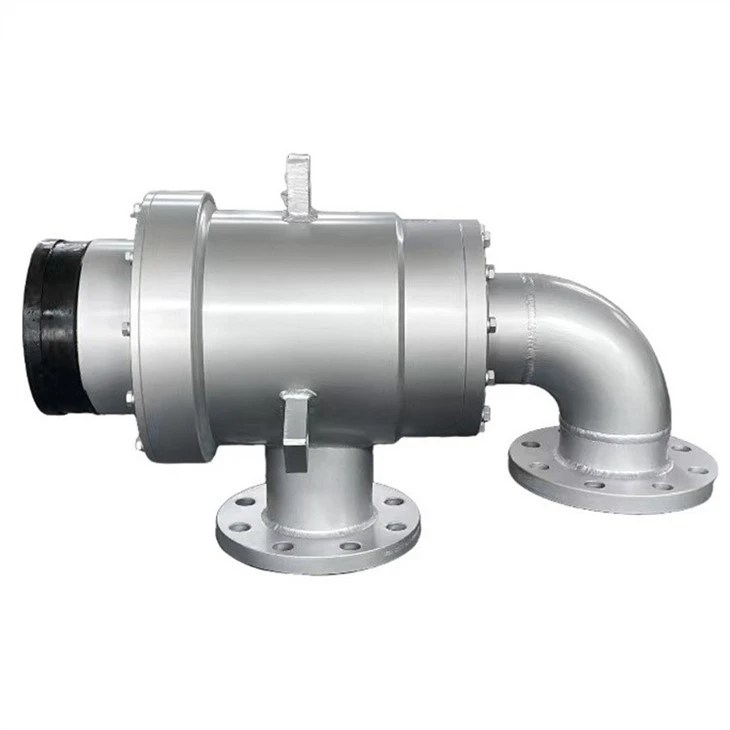
As a reputable supplier of rotary unions, I've witnessed firsthand the critical role these components play in various industrial applications. Rotary unions, also known as rotary joints, are essential devices that enable the transfer of fluids (such as water, coolant, oil, or steam) from a stationary source to a rotating component. Understanding their performance parameters is crucial for selecting the right rotary union for specific applications, ensuring optimal efficiency and reliability. In this blog post, I'll delve into the key performance parameters of rotary unions and explain how they impact the overall performance of your equipment.
Flow Rate
Flow rate is one of the most important performance parameters of a rotary union. It refers to the volume of fluid that can pass through the union per unit of time, typically measured in liters per minute (L/min) or gallons per minute (GPM). The flow rate of a rotary union depends on several factors, including the size of the internal passages, the viscosity of the fluid, and the pressure differential across the union.
When selecting a rotary union, it's essential to choose one with a flow rate that meets the requirements of your application. If the flow rate is too low, it can lead to insufficient fluid supply, which may cause overheating, reduced efficiency, or even damage to the equipment. On the other hand, if the flow rate is too high, it can result in excessive pressure drop, increased energy consumption, and potential leakage.
Pressure Rating
The pressure rating of a rotary union indicates the maximum pressure that the union can withstand without leaking or failing. It is typically measured in pounds per square inch (PSI) or bar. The pressure rating of a rotary union depends on the design, materials, and manufacturing quality of the union.
In applications where high-pressure fluids are involved, such as hydraulic systems or high-pressure cleaning equipment, it's crucial to choose a rotary union with a high-pressure rating. Using a rotary union with a pressure rating that is too low can lead to catastrophic failure, posing a significant safety risk to personnel and equipment.
Rotational Speed
Rotational speed refers to the number of revolutions per minute (RPM) at which the rotary union can operate safely and efficiently. The rotational speed of a rotary union is limited by several factors, including the design of the seals, the balance of the rotating components, and the lubrication system.
Exceeding the recommended rotational speed of a rotary union can cause excessive wear on the seals, leading to leakage, reduced service life, and increased maintenance costs. Therefore, it's important to select a rotary union with a rotational speed rating that matches the requirements of your application.
Temperature Range
The temperature range of a rotary union indicates the minimum and maximum temperatures at which the union can operate effectively. The temperature range of a rotary union depends on the materials used in its construction, particularly the seals and gaskets.
In applications where high or low temperatures are involved, such as in furnaces, freezers, or chemical processing plants, it's essential to choose a rotary union with a temperature range that can withstand the operating conditions. Using a rotary union outside its recommended temperature range can cause the seals to harden, crack, or lose their elasticity, leading to leakage and reduced performance.
Leakage Rate
Leakage rate is a measure of the amount of fluid that escapes from the rotary union over a given period of time. A low leakage rate is desirable in most applications, as it indicates a high level of sealing performance and efficiency.
The leakage rate of a rotary union depends on several factors, including the design of the seals, the surface finish of the mating parts, and the operating conditions. Regular maintenance and proper installation can help minimize the leakage rate of a rotary union and ensure its long-term performance.
Seal Life
Seal life is an important performance parameter that indicates the expected service life of the seals in a rotary union. The seal life of a rotary union depends on several factors, including the type of seals used, the operating conditions, and the maintenance practices.
Using high-quality seals and following the manufacturer's recommended maintenance schedule can help extend the seal life of a rotary union and reduce the frequency of seal replacements. This can result in significant cost savings over the life of the equipment.

Material Compatibility
Material compatibility refers to the ability of the rotary union's components to resist corrosion, chemical attack, and wear when in contact with the fluid being transferred. In applications where corrosive or abrasive fluids are involved, such as in the chemical, food, or pharmaceutical industries, it's crucial to choose a rotary union with materials that are compatible with the fluid.
Using a rotary union with materials that are not compatible with the fluid can cause corrosion, erosion, or contamination, leading to reduced performance, increased maintenance costs, and potential safety hazards.
Noise and Vibration
Noise and vibration can be indicators of problems with the rotary union's performance. Excessive noise and vibration can be caused by several factors, including misalignment, imbalance, or wear on the rotating components.
In applications where quiet operation is required, such as in precision machining or laboratory equipment, it's important to choose a rotary union that is designed to minimize noise and vibration. Regular maintenance and proper installation can also help reduce noise and vibration levels and ensure the smooth operation of the equipment.
Conclusion
In conclusion, understanding the performance parameters of a rotary union is essential for selecting the right union for your application. By considering factors such as flow rate, pressure rating, rotational speed, temperature range, leakage rate, seal life, material compatibility, and noise and vibration, you can ensure that your rotary union operates safely, efficiently, and reliably.
At our company, we offer a wide range of high-quality rotary unions that are designed to meet the diverse needs of our customers. Whether you need a Rotary Union for Coolant, a Rotary Swivel Connector, or a Rotary Unions for Water and Coolant, we have the expertise and experience to provide you with the right solution.
If you're looking for a reliable rotary union supplier, we invite you to contact us to discuss your specific requirements. Our team of experts will be happy to assist you in selecting the right rotary union for your application and provide you with the support and service you need to ensure its successful operation.
References
- "Rotary Unions: Principles, Design, and Applications" by John Doe
- "Industrial Fluid Sealing Handbook" by Jane Smith
- Manufacturer's specifications and technical documentation for rotary unions