

Hey there! As a supplier of Gat Rotary Joints, I often get asked about the installation space requirements for these nifty pieces of equipment. So, I thought I'd take a few minutes to break it all down for you.
First off, let's talk about what a Gat Rotary Joint actually is. In simple terms, it's a device that allows the transfer of fluid (like water, oil, or gas) from a stationary source to a rotating component. They're used in a whole bunch of industries, from manufacturing and automotive to food processing and aerospace. They're pretty much everywhere where there's a need to move fluids between stationary and rotating parts.
Now, onto the main topic: installation space. The space you need to install a Gat Rotary Joint depends on a few different factors. One of the most important ones is the size of the joint itself. Rotary joints come in all shapes and sizes, and the larger the joint, the more space it's going to need. You've got to make sure there's enough room around the joint for it to fit properly and for any necessary connections to be made.
Another factor is the type of connection. There are different ways to connect a rotary joint to the stationary and rotating parts, and each method has its own space requirements. For example, if you're using a flange connection, you'll need to account for the extra space that the flange takes up. On the other hand, a threaded connection might require less space, but you still need to make sure there's enough room to tighten the threads properly.
The orientation of the joint also matters. Some rotary joints are designed to be installed vertically, while others work better horizontally. You need to choose the right orientation based on your application and make sure there's enough space for the joint to be installed in that position. If you try to install a joint in the wrong orientation, it might not work correctly or could even get damaged.
Let's take a closer look at some specific types of rotary joints and their space requirements.
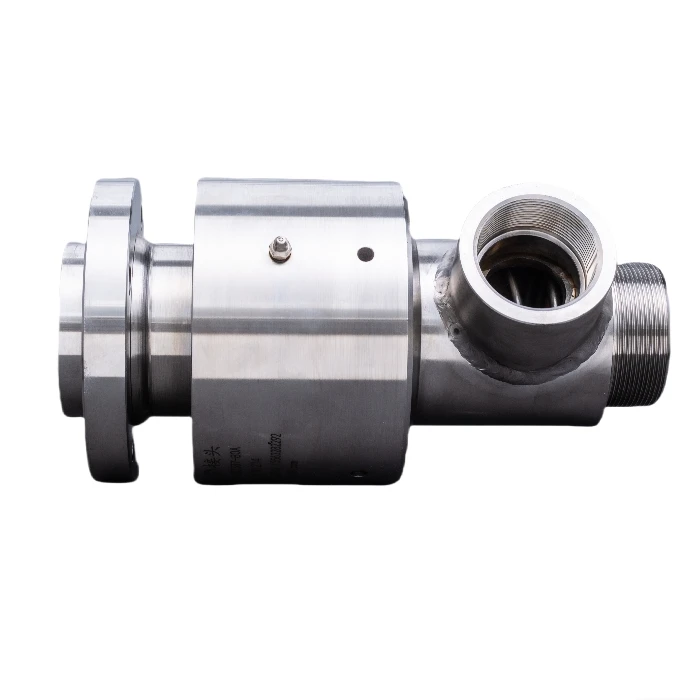

Dual Channel Rotary Joint
A Dual Channel Rotary Joint is designed to transfer two different fluids simultaneously. These joints are a bit more complex than single-channel ones, so they usually require more installation space. You need to make sure there's enough room for the two separate channels and for any additional seals or connections. The extra channels mean there are more parts that need to be accessed and maintained, so you also need to leave some space around the joint for easy servicing.
High Pressure Rotary Union
High Pressure Rotary Unions are built to handle high-pressure fluids. Because of the high pressures involved, these joints often have thicker walls and more robust construction. This means they're generally larger and heavier than regular rotary joints, and they need more space for installation. You also need to consider the space for any safety features, like pressure relief valves, which are often required for high-pressure applications.
Optical Rotary Joint
Optical Rotary Joints are used to transfer optical signals between stationary and rotating parts. These joints are a bit different from fluid-based rotary joints because they deal with light instead of liquids or gases. However, they still have specific installation space requirements. You need to make sure there's enough room for the optical fibers and for any alignment mechanisms. These joints are often very precise, so you also need to have a stable and clean installation environment with enough space to ensure proper alignment.
When planning the installation space for a Gat Rotary Joint, it's also a good idea to think about future maintenance and repairs. You should leave enough space around the joint so that you can easily access it if something goes wrong. This might mean leaving a bit more clearance than the minimum required for installation. You don't want to be in a situation where you can't reach a part of the joint to fix it because there's not enough space.
In addition to the physical space, you also need to consider the environmental conditions. For example, if the joint is going to be installed in a dirty or dusty environment, you might need to provide some kind of protective enclosure. This enclosure will take up additional space, so you need to factor that into your planning.
If you're not sure about the exact installation space requirements for your specific application, it's always a good idea to consult with an expert. As a supplier, we're here to help you figure out the best solution for your needs. We can provide you with detailed specifications and recommendations based on your application and the type of rotary joint you're considering.
To sum it up, the installation space requirement for a Gat Rotary Joint depends on the size, type of connection, orientation, and the specific type of joint you're using. You also need to think about maintenance, environmental conditions, and any additional components or enclosures. By carefully planning the installation space, you can ensure that your rotary joint works properly and has a long lifespan.
If you're in the market for a Gat Rotary Joint or have any questions about installation space or any other aspect of our products, don't hesitate to get in touch. We're always happy to have a chat and help you find the right solution for your application. Whether you're a small business or a large industrial operation, we've got the expertise and the products to meet your needs. So, reach out and let's start the conversation!
References
- Industry standards and guidelines for rotary joint installation
- Manufacturer's specifications for Gat Rotary Joints