

Hey there! As a supplier of rotary union k, I've been getting a lot of questions lately about flow distribution uniformity in these nifty devices. So, I thought I'd take a deep dive into what it is, why it matters, and how we can ensure it in our products.
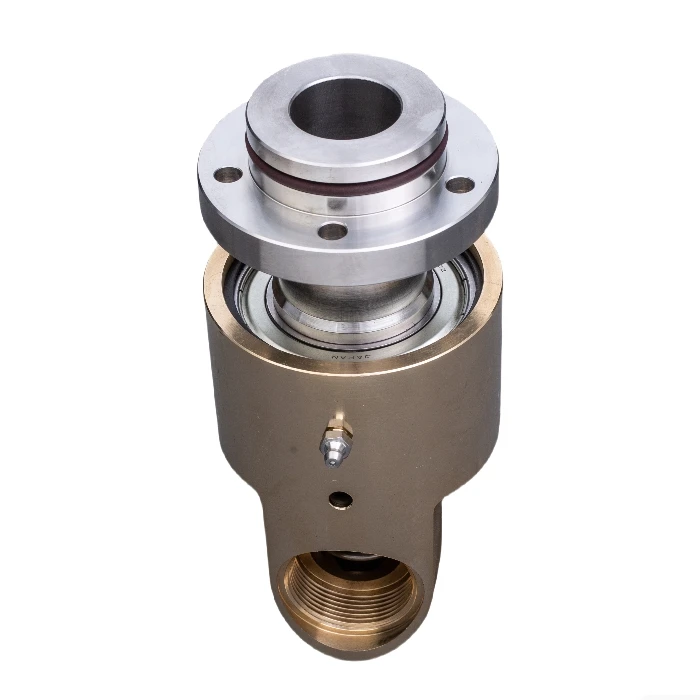

First things first, let's break down what flow distribution uniformity means. In a rotary union k, you've got fluids or gases flowing through it, and the goal is to make sure that the flow is evenly spread out across the entire cross - section of the union. Think of it like watering your garden. You don't want all the water to gush out from one side of the hose; you want it to be evenly distributed so that every part of the garden gets watered properly.
When it comes to rotary union k, uneven flow distribution can lead to a whole bunch of problems. For starters, it can cause uneven wear and tear on the internal components. If one area of the union is getting a much higher flow rate than the rest, that part will experience more stress and friction, which can shorten its lifespan. This means more frequent replacements and higher maintenance costs for you.
Another issue is that uneven flow can affect the performance of the system that the rotary union k is a part of. For example, if it's used in a manufacturing process where precise temperature control is required, uneven flow of a cooling or heating fluid can lead to inconsistent product quality. You might end up with parts that are over - or under - cooled, which can cause defects.
So, how do we achieve flow distribution uniformity in a rotary union k? Well, it all starts with the design. At our company, we use advanced computer - aided design (CAD) software to model the flow of fluids through the union. This allows us to simulate different scenarios and make adjustments to the internal geometry to ensure that the flow is as even as possible.
One of the key design features we focus on is the shape of the flow channels. We use smooth, streamlined channels that minimize turbulence and pressure drops. Turbulence can disrupt the flow and cause uneven distribution, so by reducing it, we can improve the uniformity. Additionally, we pay close attention to the size and layout of the inlet and outlet ports. The right placement and sizing of these ports can help direct the flow in a more controlled manner.
Material selection also plays a crucial role. We choose high - quality materials that are resistant to corrosion and wear. This ensures that the internal surfaces of the rotary union k remain smooth over time, which helps maintain the flow distribution. For example, we might use stainless steel or other alloys that can withstand the harsh conditions of fluid flow.
Now, let's talk about some of the different types of rotary union k and how flow distribution uniformity applies to them.
If you're looking for a Fluid Rotary Connector, which is used for transferring fluids like water, oil, or chemicals, flow distribution is especially important. These connectors are often used in industrial processes where precise fluid control is essential. Our fluid rotary connectors are designed with optimized flow channels to ensure that the fluid is evenly distributed, whether it's a low - viscosity liquid like water or a high - viscosity oil.
Fiber Optic Joints are another type of rotary union k. While they don't deal with fluid flow in the traditional sense, they do involve the transfer of light signals. In this case, the equivalent of flow distribution uniformity is ensuring that the light is evenly distributed across the fiber optic cables. Our fiber optic joints are engineered to minimize signal loss and ensure consistent transmission, which is crucial for applications like telecommunications and data transfer.
Rotary Union Coupling is yet another important type. These couplings are used to connect different parts of a rotating system and transfer fluids or gases between them. Flow distribution uniformity in rotary union couplings is vital for maintaining the integrity of the connection and ensuring smooth operation. Our couplings are designed with precision to ensure that the flow is evenly distributed between the connected components.
We also conduct rigorous testing on our rotary union k products. We use flow meters and pressure sensors to measure the flow rate and pressure at different points in the union. This data allows us to verify that the flow distribution is within the acceptable range. If we find any deviations, we can make further adjustments to the design or manufacturing process.
In addition to design and testing, proper installation and maintenance are also key to maintaining flow distribution uniformity. When installing a rotary union k, it's important to follow the manufacturer's instructions carefully. Incorrect installation can cause misalignment, which can disrupt the flow. Regular maintenance, such as cleaning and lubrication, can also help keep the internal components in good condition and ensure that the flow remains even.
So, if you're in the market for a rotary union k and are concerned about flow distribution uniformity, you've come to the right place. We've got the expertise, the technology, and the commitment to quality to provide you with a product that meets your needs. Whether you need a fluid rotary connector, a fiber optic joint, or a rotary union coupling, we can offer you a solution that ensures optimal flow distribution.
If you're interested in learning more about our products or have any specific requirements, don't hesitate to reach out. We'd be more than happy to have a chat with you and discuss how our rotary union k can improve the performance of your system. Let's work together to get the best flow distribution uniformity and make your operations run smoothly.
References
- Fluid Mechanics textbooks
- Industry standards and guidelines for rotary union design and performance