

Many people who use rotary joints frequently encounter the terms "mechanical seal" and "hydraulic seal," yet they often struggle to articulate exactly where the differences lie. It isn't actually that complicated; let's discuss it in plain, simple language.
First, let's talk about mechanical seals. These are the more common type, particularly within rotary joints. The core concept relies on two highly polished sealing faces pressed tightly together-one rotating with the shaft, the other remaining stationary-creating a thin liquid film between them. This film serves a dual purpose: reducing friction while simultaneously preventing the process fluid (medium) from leaking out. This sounds a bit "precision-oriented," and indeed it is; mechanical seals impose relatively high demands on both manufacturing precision and installation accuracy.
The advantages of mechanical seals include superior sealing performance, suitability for high-speed rotational applications, and a relatively long service life. However, they do have a downside: they are somewhat "delicate." If impurities enter the system, or if dry friction occurs (e.g., running without any fluid present), the seals can easily suffer excessive wear or even burn out. Consequently, their use typically requires the process fluid to be relatively clean, and it is crucial to ensure that the joint does not run dry before startup.
Next, let's look at hydraulic seals. This approach is actually a bit more traditional, commonly utilizing various types of sealing rings-such as O-rings or lip seals. Their sealing mechanism relies primarily on rubber or other elastic materials pressing firmly against the contact surfaces under fluid pressure. They feature a simple structure, low cost, and are generally quite "rugged" and robust in operation.
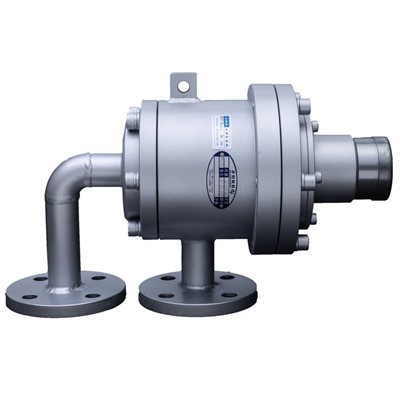
The advantages of hydraulic seals include durability and strong resistance to impurities; furthermore, they have less stringent installation requirements, making them suitable for applications where operating conditions are not particularly harsh. However, they do have limitations: under high rotational speeds, high temperatures, or high pressures, they are prone to wear and deformation. Their sealing performance is not as stable as that of mechanical seals, and over time, the material may age or harden, potentially leading to fluid leakage.
To summarize simply: mechanical seals are the "precision performers," best suited for demanding, high-speed environments; hydraulic seals are the "durable workhorses," ideal for standard operating conditions and cost-sensitive applications.
Ultimately, the choice between the two depends on the specific operating environment-factors such as rotational speed, temperature, fluid cleanliness, budget constraints, and so on. Do not blindly chase after the "most advanced" option; selecting the solution that is truly *appropriate* for your needs is the key. By understanding the fundamental differences between these two types of seals, you can avoid many potential pitfalls during the selection and maintenance processes.